Measuring the electrochemical performance of batteries
The electrochemical performance of batteries depends on various parameters such as voltage capacity (autonomy), internal resistance, charging and discharging speed, coulombic efficiency and cycle (service life).
This performance can vary depending on experimental conditions (e.g. ambient temperature or pressure applied to the cell), battery format (coin cell or pouch cell), component dimensions (electrode weight and porosity, type and quantity of electrolyte, etc.), and battery manufacturing quality (from electrode or electrolyte manufacture to cell assembly).
Our equipment for prototyping and measuring the electrochemical performance of batteries.
Electrode manufacturing
Coin cell assembly
Pouch cell assembly
Electrochemical performance measurement
Contact and prices
For prices and access to battery electrochemical performance measurement equipment, please contact us by email :
The preparation of batteries in pouch cell format allows measuring the electrochemical performance of a battery material or component under conditions similar to commercial systems. Pouch cells are semi-industrial prototypes that can be used as demonstrators, and are more reproducible than the coin cells usually used in academic laboratories.
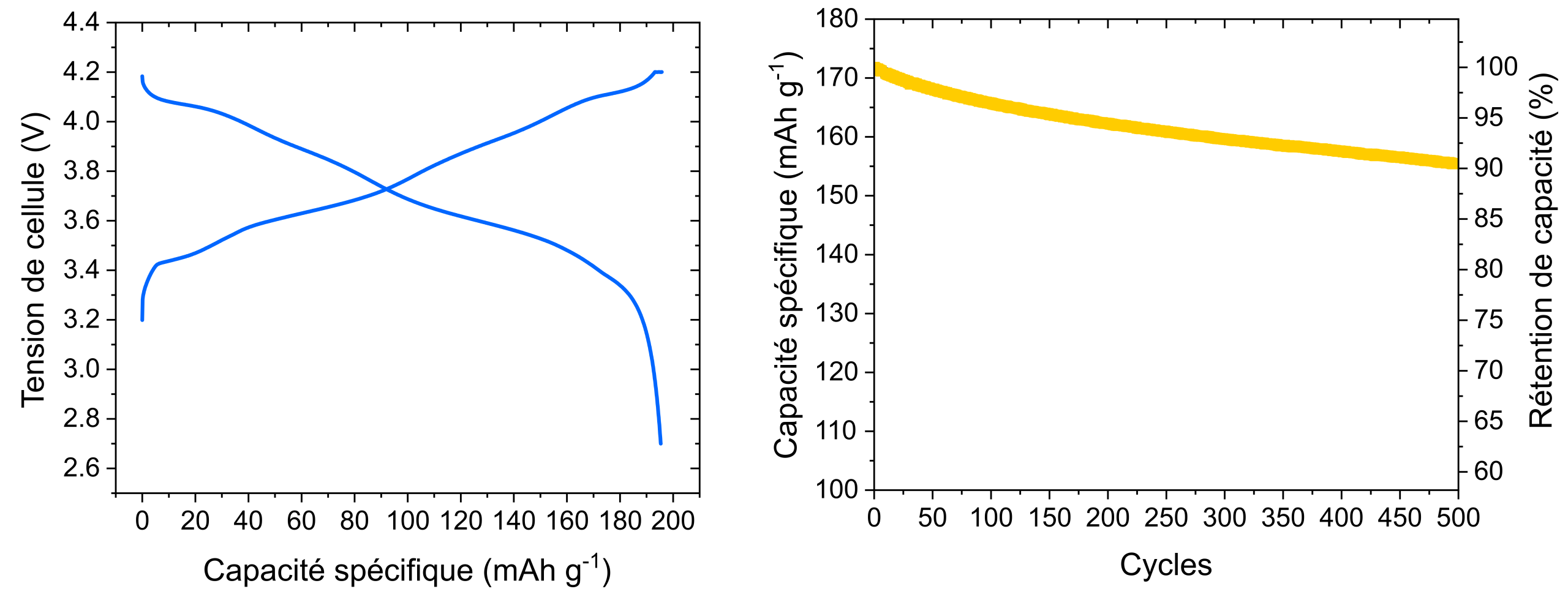
NMC811//Graphite pouch cell charge/discharge cycle and cyclability for different identical 0.07 Ah (4.5 mAh/cm²) cells at 25°C.
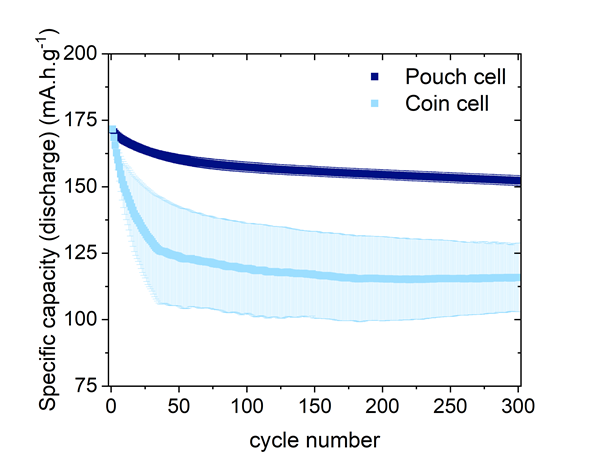
Evolution of NMC811/graphite coin cell (x3, light blue) and pouch cell (x4, dark blue) capacity as a function of number of cycles. Charge/discharge rate: C/2; electrolyte 1M LiPF6 (EC:EMC = 3:7) + 2% VC; aeral capacity 4.1 mAh/cm². Reproducibility of pouch cell measurements is excellent.
Another example of performance measurement
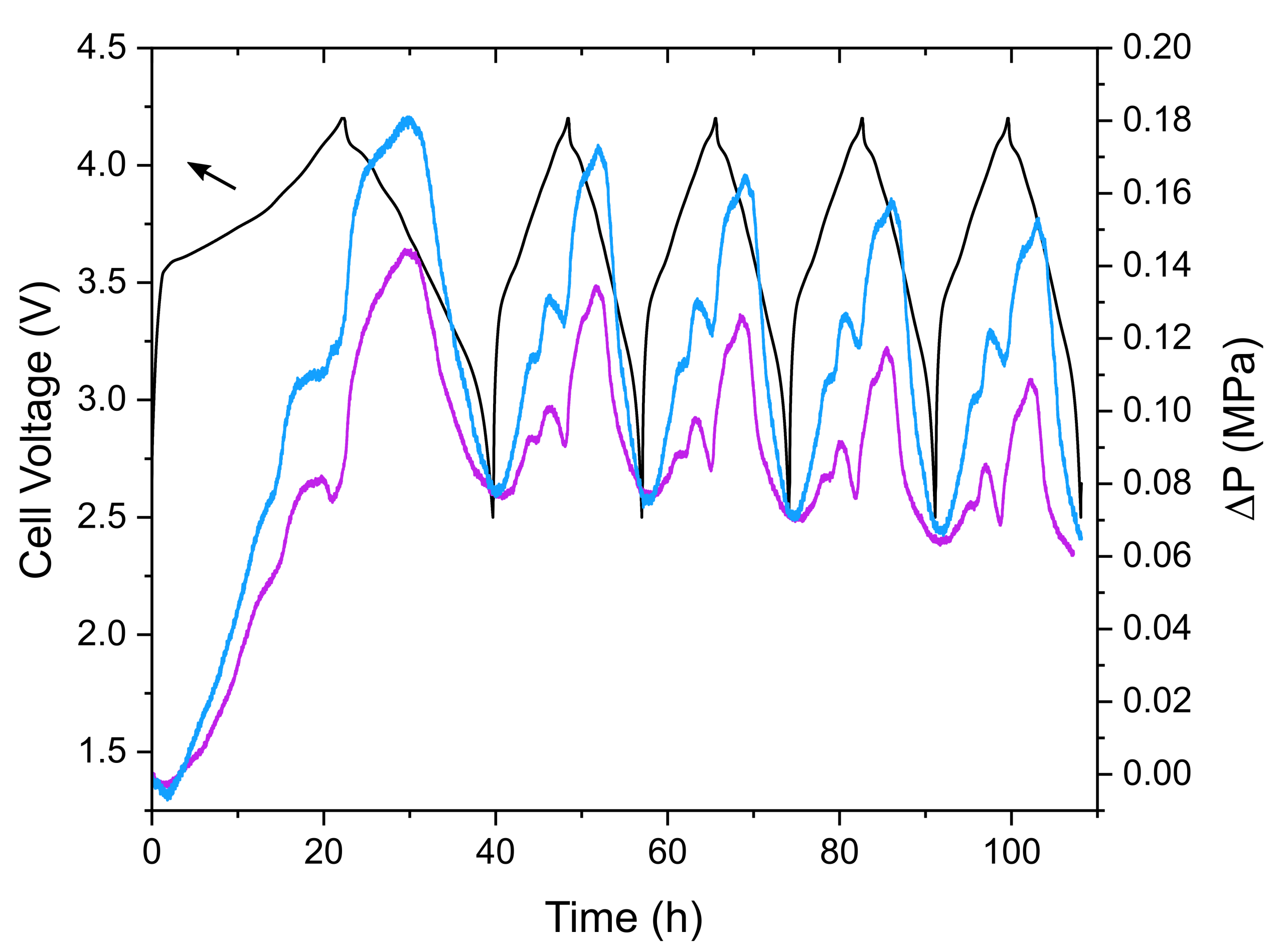
Measurement of the electrochemical performance of pouch cells can be accompanied by the operando monitoring ofpressure changes in the batteries, thanks to the use of piezoelectric force sensors.
These measurements are particularly relevant to silicon-based negative electrodes, and can be help as with the formulation and selection of anode materials.
Evolution of cell voltage (black) and pressure variation (color) during the formation cycles of SiOx-graphite/NMC811 pouch cells with two different compositions at the negative electrode.